 Skip to content

You’ve done your research on what happens in the chair. You know which procedures you’ll need. But here’s the part that most blogs skip: what happens after you leave the office, and how long it actually takes before your mouth feels like yours again.
Full-mouth reconstruction recovery is its own journey, separate from the treatment itself. Understanding the timeline isn’t just helpful — it’s what lets you plan your life around healing instead of being caught off guard by it. At Vero Dental Spa in Vero Beach, FL, Dr. Royal walks every patient through recovery expectations before a single procedure begins, because an informed patient heals with far less stress.
This guide focuses specifically on recovery — not on what happens during your appointments. If you want that side of the picture, we have a dedicated post on what to expect during a full-mouth reconstruction. Here, we’re covering the days, weeks, and months that follow.
Recovery Is Not the Same as the Procedure, and That Distinction Matters
Many patients confuse the two. The procedures themselves are carefully managed with local anesthesia, sedation options, and our team’s focus on your comfort in the moment. Recovery is different. It’s what your body does on its own time, in your own home, while the work integrates and heals.
Because full-mouth reconstruction involves multiple procedures, often performed in stages across several appointments, your recovery isn’t a single event either. It’s layered. Some procedures heal in days. Others take months. The total timeline depends on exactly which treatments were part of your plan and how your body responds.
What you eat, how you sleep, whether you follow post-op instructions, and even your overall health all affect how quickly and smoothly you heal. That’s not a scare tactic; it’s just the reality of restorative dentistry at this scale. Knowing it upfront means fewer surprises.
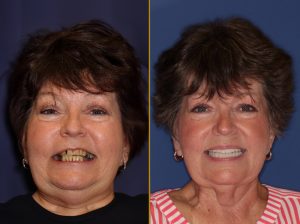
Your Full-Mouth Reconstruction Recovery Timeline, Week by Week
Recovery doesn’t look the same for every patient. Someone who received fillings and crowns will heal much faster than someone who has had multiple implants placed alongside bone grafting. That said, there are general phases nearly every patient moves through.
The First 72 Hours: The Acute Phase
The first three days after a procedure are typically the most intense. This is when swelling peaks, and discomfort is at its highest. If you’ve had surgical work, implant placement, extractions, gum surgery, or bone grafts, expect this phase to require real rest.
What to expect in the first 72 hours:
- Swelling that peaks around day two and begins to subside by day three
- Mild to moderate soreness, well-managed with over-the-counter pain relievers or any prescribed medication from Dr. Royal
- Sensitivity to temperature, especially cold
- Possible minor bleeding at surgical sites (normal for the first 24 hours)
- Fatigue — your body is using energy to heal
Most patients find this phase more manageable than they anticipated. Having ice packs ready, soft foods stocked, and your medications on hand before your appointment makes a significant difference. Our team at Vero Dental Spa in Vero Beach sends every patient home with written post-op instructions so you’re not guessing.
Days 4 to 14: Your Body Starts to Settle
By the end of the first week, most patients with crown, bridge, or root canal work have returned to their normal routines. Discomfort is minimal and manageable. Sensitivity may linger, but it’s typically mild.
Patients who had dental implants placed are still in the early stages of osseointegration, the process by which the implant fuses with your jawbone. According to the American Dental Association, this process can take anywhere from two to six months, depending on bone density, implant location, and individual healing factors.
During this window:
- Avoid hard, crunchy, or sticky foods on the treated side
- Brush gently around any surgical sites
- Keep follow-up appointments — this is when Dr. Royal checks healing and adjusts anything that needs it
- Avoid smoking, which significantly slows tissue healing
If you had multiple procedures in a single appointment, you may still be feeling tired during week two. That’s normal. Listen to your body.
Weeks 3 and 4: Getting Back to Normal
Most patients with non-surgical procedures, crowns, bridges, veneers, and fillings feel entirely normal by week three. The treated teeth feel natural, sensitivity has resolved, and eating is comfortable again.
For patients with implants or surgical work, weeks three and four usually bring a noticeable shift. The acute soreness is gone. Gum tissue is closing over surgical sites. You may be cleared to reintroduce firmer foods; always check with Dr. Royal before you do.
This is also when many Vero Beach patients start to get a real preview of their results. The swelling is down, and the tissue has healed enough that you can see the shape of your new smile. For most people, this moment is worth everything.
Months 2 to 6: The Long Healing Arc
Osseointegration, implant fusion with the jawbone, continues for up to six months after placement. You won’t feel this happening. Most patients feel completely normal during this phase. But internally, the bone is building around the implant, creating the stable foundation that lets it function like a natural tooth root.
According to the National Institute of Dental and Craniofacial Research, implant success rates are high, around 95%, but that success depends heavily on proper healing during this phase.
If your reconstruction included bone grafting, the timeline extends further. Bone grafts typically take three to six months before they’ve fully integrated, at which point implants can be placed on top of the graft.
This is also the period where your permanent restorations may be delivered, the final crowns, bridges, or prosthetics that complete your reconstruction. The timeline for receiving your final work depends on your specific treatment plan and was discussed with you at your consultation.
Eating During Recovery: What to Avoid and Why
Your diet during recovery matters more than most patients expect. Eating the wrong things at the wrong time can dislodge temporary restorations, irritate healing tissue, and introduce bacteria to surgical sites.
During the first week after any procedure, stick to:
- Soft foods — yogurt, mashed potatoes, scrambled eggs, smoothies, soup
- Room temperature or slightly warm foods (avoid very hot or cold)
- Foods that don’t require significant chewing
Avoid throughout recovery (until cleared by Dr. Royal):
- Hard foods — chips, raw carrots, hard candies
- Sticky foods — caramel, gum, chewy bread
- Alcohol, which can interfere with medications and healing
- Straws (for the first week post-surgery, to avoid dry socket)
For patients who love the restaurants and fresh seafood Vero Beach is known for, we know the waiting is the hardest part. Most patients are back to enjoying their favorite meals within four to six weeks, and completely unrestricted eating within a few months of implant placement.

Managing Discomfort Without Losing Your Routine
Discomfort after full-mouth reconstruction is real, but it’s also predictable and manageable. For most procedures, over-the-counter ibuprofen or acetaminophen is all that’s needed. For more involved surgical work, Dr. Royal may prescribe a short course of stronger pain relief or an antibiotic to prevent infection.
A few things that help recovery go more smoothly in the first week:
- Sleep with your head slightly elevated to reduce swelling
- Apply ice packs in 20-minute intervals for the first 48 hours
- Rinse gently with warm salt water after 24 hours (do not swish vigorously at surgical sites)
- Avoid exercise for the first few days — increased heart rate can prolong bleeding
If you’re managing dental anxiety in addition to recovery, talk to our team. We offer sedation options that can make the procedure phase easier, and we’re always available by phone for Vero Beach patients with concerns during recovery.
When to Call Dr. Royal: Warning Signs During Recovery
Most full-mouth reconstruction recoveries are uneventful. But some signals mean you should contact Vero Dental Spa right away:
- Swelling that continues to increase after day three instead of decreasing
- Fever above 101°F, which may indicate infection
- Bleeding that doesn’t slow with gentle pressure after 30 minutes
- A restoration that feels loose, shifted, or broken
- Severe pain that doesn’t respond to pain medication
- A dry socket feeling — a sharp, radiating ache at an extraction site after day three
We’re here for you before and after your appointments. Reach our Vero Beach office at (772) 778-5550 any time you have a question. Our team would much rather field a call that turns out to be nothing than have a patient wait through something that needed attention.
Follow-Up Visits at Vero Dental Spa: What Happens After
Recovery doesn’t mean you’re on your own. Follow-up appointments are a built-in part of your care at Vero Dental Spa. Dr. Royal schedules check-ins to monitor healing, check the fit of restorations, and make any needed adjustments to your bite.
The number of follow-up visits depends on the complexity of your reconstruction. Patients who received implants will have more frequent check-ins during the osseointegration phase. Patients who had crown or bridge work typically return once for a final bite check and adjustment.
Understanding the cost of full-mouth reconstruction includes these follow-up appointments, which are built into the overall care plan. If you’re thinking about whether reconstruction is the right move, read more about the benefits of full-mouth reconstruction or explore whether you’re a candidate.
After your final restoration is placed and healing is confirmed, you’ll return to your regular preventive schedule, cleanings, exams, and any maintenance your specific restorations require. That’s the finish line, and it’s one worth reaching.
Frequently Asked Questions About Full-Mouth Reconstruction Recovery
Can I go back to work the day after my procedure?
For most non-surgical procedures, yes. After fillings, crowns, or root canal therapy, most Vero Beach patients return to work within 24 to 48 hours. After surgical procedures like dental implant placement or bone grafting, we recommend taking two to three days off, depending on the nature of your work. If your job involves physical labor, you may need up to a week before returning to full activity.
What can I eat right after my procedure?
Soft, easy-to-chew foods for the first several days, think yogurt, mashed potatoes, eggs, and smoothies. Avoid anything hard, crunchy, sticky, or very hot for the first week. After surgical procedures, follow Dr. Royal’s specific guidance, as diet restrictions will be tied to your healing progress at each follow-up visit.
How many follow-up appointments will I need at Vero Dental Spa in Vero Beach?
That varies by your specific treatment. Implant patients typically have the most follow-up visits — often at one week, one month, three months, and six months post-placement. Crown and bridge patients may have just one or two follow-up visits. Your care coordinator will map out your full follow-up schedule before your first procedure so you can plan accordingly.
Rebuild Your Smile with Dr. Royal
Full-mouth reconstruction is one of the most significant investments you can make in your health, function, and confidence. Recovery is part of that process, not a hurdle, but a phase. Dr. Royal and the team at Vero Dental Spa are with you through every stage of it. To schedule a consultation or ask questions about your specific recovery, call us at (772) 778-5550 or visit us at 3036 20th St, Vero Beach, FL 32960.
